
USFans Spreadsheet · Guides
USFans Women’s Finds: Build the Outfit Around Measurements and Use
Compare USFans women’s clothing candidates by intended outfit, garment dimensions and selected contents rather than assuming a category label establishes fit.
A women’s shopping category can help you browse, but it does not define the fit you will get from an individual garment. Begin with the outfit you want to wear, then compare the actual cut and dimensions of each piece. Your preferred silhouette matters more than a category label or a model’s pose.
Use the USFans spreadsheet collection to keep a manageable shortlist. Save the product reference, selected colour and relevant size information together rather than collecting photographs with no clear purchase option.
On this page
Choose an outfit you can describe
Start with an occasion and the clothes you already use for it. You might want a top to wear tucked into trousers, an extra layer over a dress, or shoes that suit the outline of a favourite pair of jeans. These are different searches, so identify the missing piece before adding several unrelated items.
Try the existing outfit and note what you want the new item to change. For a top, that could be neckline or hem position. For trousers, it might be rise or leg opening. Avoid replacing those preferences with a universal rule about what women should wear or which body type a design suits.
The T-shirt guide, pants and shorts guide and jacket guide cover those garment-specific comparisons.
Compare the chart that belongs to the item
Identify whether the listing gives body measurements or garment dimensions, and which units it uses. Do not compare a full circumference with a flat width as if they were the same number. Use the size guide to keep the method consistent.
If a garment is fitted through more than one area, a single measurement may not settle the choice. Compare the relevant dimensions together and consider the room you prefer. Do not infer stretch from a close-fitting photograph or assume that a larger size changes every proportion in the way you want.
For a dress or skirt, establish the length reference used by the listing. A photograph cannot predict where the hem will fall on you without relevant information. If the chart leaves an essential measurement unclear, seek clarification before choosing rather than treating the model’s appearance as a size recommendation.
Use a simple comparison note
Swipe sideways to compare all columns.
| Item you want | Preference to define | Information to check |
|---|---|---|
| Top | Tucked or untucked, neckline and sleeve shape | Applicable width and length measurements |
| Trousers | Waistband position and leg silhouette | Waist method, rise, inseam and opening |
| Dress or skirt | Intended hem position and room | Relevant length and fit dimensions |
| Outer layer | What you intend to wear underneath | Garment dimensions and closure arrangement |
| Shoes | Outfit pairing and intended use | Exact model, size system and applicable details |
Keep your own measurements private. A product question usually needs clarification of the item’s dimensions, not a public photograph of your body.
Separate a visual candidate from a fit recommendation
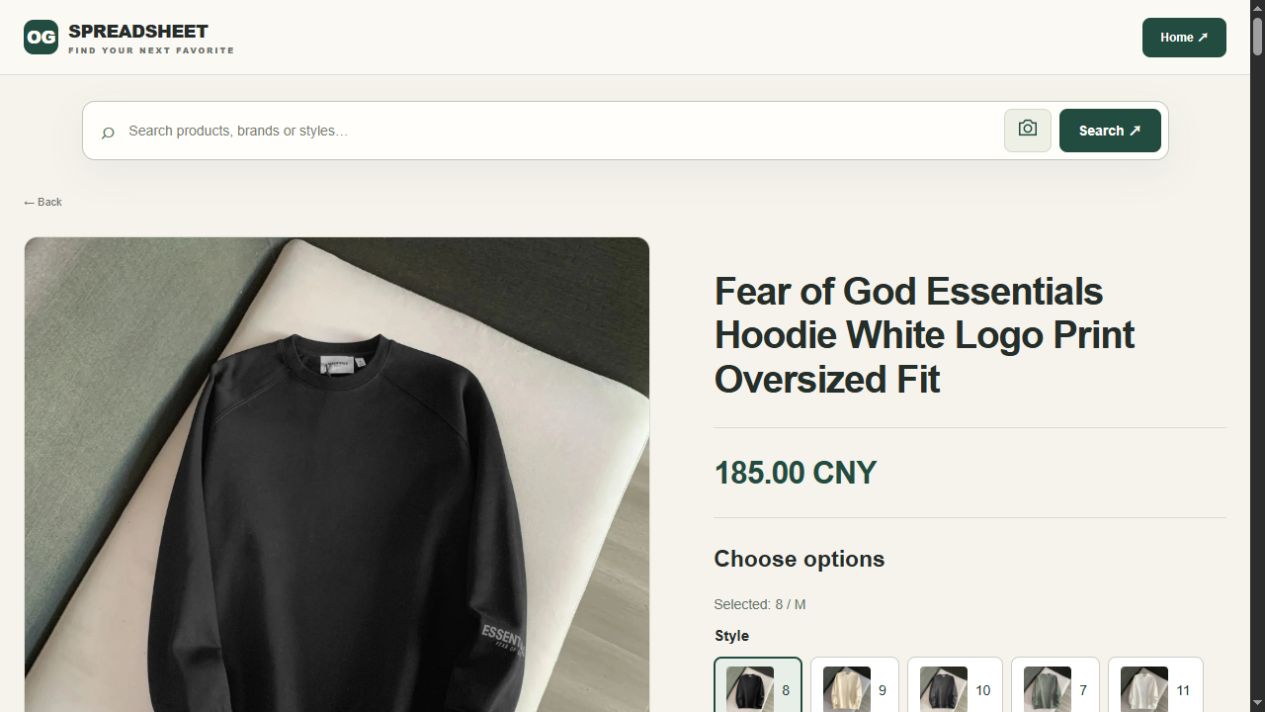
Inspect the upper-layer candidate on OG if it suits your outfit idea. Style 8 / M showed a black crewneck on 1 October 2026, despite the hoodie heading. Compare the actual option and chart with your proportions instead of inferring a women-specific fit from the title.
For a hoodie worn over another piece, compare the body length and room with the intended underneath layer, and consider where the hood will sit. Its visible surface does not establish how much the fabric stretches or how it will feel. The hoodies and sweaters guide helps keep those questions separate.
Check the selected garment rather than the styled look
When actual-item photos are available, match the colour and option first. Examine the details that matter to the order, such as the closure, neckline, sleeve arrangement or a relevant measurement. A styled photograph may include a belt, bag or separate layer that is not part of the selected purchase.
For coordinated clothing, consult the sets guide before assuming both pieces are included. If a photograph is too folded or angled to answer the question, seek the specific view rather than interpreting it more confidently.
The QC photo guide explains what visible checks can establish. Images do not reproduce comfort, fabric feel or wash behaviour.
Make the purchase decision item by item
An outfit can work visually while one piece remains poorly documented. You do not have to order every item at once. Keep the strongest candidates and resolve the uncertain item separately rather than relying on the look of the whole combination.
Before committing, review the applicable return process and the ordering guide. Do not assume every garment or selected option has identical remedy conditions.
Common questions
Does a women’s category guarantee a suitable size?
No. Check the exact garment, size system and applicable measurements against your preferences.
Can I compare a unisex-labelled item?
Yes, as a candidate: assess its actual cut and dimensions rather than treating either label as a fit guarantee.
Should I copy the size worn by a model?
Not without a relevant comparison. The photograph alone does not establish the room, length or proportions you want from that garment.