
USFans Spreadsheet · Guides
USFans Jackets: Choose for the Journey, Not Just the Photograph
Compare USFans jacket candidates by layering needs, garment measurements, pockets and purchase contents without inferring weather protection from photographs.
Think through the journey you expect a jacket to make: leaving home, carrying a bag, sitting on transport and arriving somewhere indoors. That sequence reveals practical preferences a product photograph cannot answer. You might want accessible pockets, room over a sweatshirt or a shorter hem that suits the trousers you wear most often.
Use the USFans spreadsheet collection to find candidates, then compare a few exact listings against those priorities. Keep appearance, fit and weather protection as separate questions. A jacket that looks right for an outfit is not automatically suitable for prolonged rain or cold.
On this page
Describe the job in one sentence
“An outer layer over my regular hoodie for short everyday trips” is a more useful starting point than “a good jacket.” It tells you which existing garment to use when judging room and which outfit to compare in the mirror. It does not require a temperature rating you cannot verify.
Alternatively, your priority might be a light-looking layer that you expect to remove indoors, or a jacket that works visually with straight trousers. Decide which requirements are essential and which are preferences. If dependable weather protection is essential, require applicable specifications for the exact garment rather than treating a coated-looking surface or a hood as proof.
For the underneath layer, consult the hoodies and sweaters guide. Changing that layer can change the fit you need from the jacket.
Start with a concrete jacket candidate
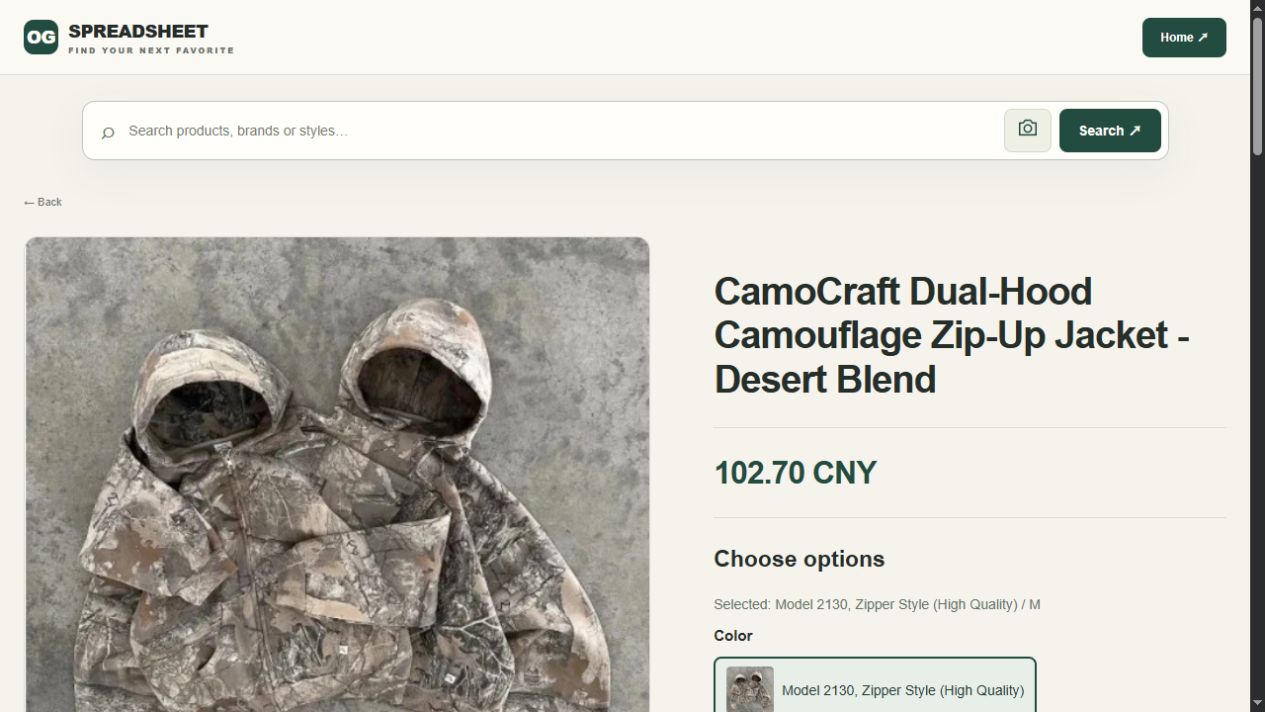
Inspect the jacket candidate on OG as a starting point for the comparison. Check the current listing and selected option before deciding whether its silhouette serves your outfit.
Look at where the hem falls relative to the trousers in the image, but do not treat the model's appearance as your measurement chart. Compare the stated garment dimensions with a jacket you own. Where pockets and fastenings are visible, use them to identify questions rather than to assume their function. Their appearance does not establish storage capacity, operating feel or performance in rain.
If your priority is a particular colour combination, examine the jacket with the pants and shorts comparison in mind. Similar-looking colours in separate photographs need not be an exact match.
Test the reference jacket before measuring it
Put on a jacket you already have with the intended underneath layer. Reach forward as if holding a rail, sit down and close the fastening. Note what you would change: tightness across the back, sleeves that feel too long, or a hem that interferes with the outfit.
Then measure that reference garment using clear, repeatable endpoints. This turns a vague complaint into a comparison you can make against another listing. It does not mean a wider chest measurement will solve every fit issue: shoulder construction, sleeve shape and the other dimensions also matter.
The size guide covers units and measurement conventions. A chart with different endpoints needs interpretation before you compare its numbers directly.
Read the details that affect everyday use
Swipe sideways to compare all columns.
| Feature | Useful question | Evidence that would help |
|---|---|---|
| Main fastening | Is the closure arrangement the one you want? | Clear front view and exact description |
| Pockets | Are the openings positioned where you expect them? | Views of the relevant pockets, not only the overall outfit |
| Cuffs | Is the adjustment or finish shown clearly? | Close view of the selected garment |
| Hood or collar | Does its shape work with your underneath layer? | Front and side views plus any applicable dimensions |
| Included accessories | Is a belt, liner or other pictured piece included? | Explicit purchase contents for the selected option |
A photo can establish that something is visible; it does not necessarily establish its function. For example, a pocket-like panel may need clarification before you assume it provides storage. Likewise, an image of a zip cannot demonstrate repeated operation.
When the actual-item photos arrive
Match the item and option first. Then inspect the visible details that led you to choose it: colour selection, collar or hood, pocket arrangement, fastening and readily visible damage. If a concern involves alignment, an evenly laid-out front view is more useful than an angled styling shot.
Ask a specific question when the view is inadequate. A sleeve measurement needs the relevant endpoints visible; a concern about an included liner needs a view or confirmation of that component. More photographs are only useful when they address the unresolved question.
Use the QC photo guide to distinguish appearance checks from material or performance testing. Do not interpret an attractive warehouse photograph as proof of waterproofing, warmth or authenticity.
Work through a commute before deciding
Consider a hypothetical comparison, not a test of the linked jacket. You want an outer layer for a journey with a backpack, a seated train ride and an indoor destination. Candidate A has the shorter outline you prefer, but its pocket openings are unclear. Candidate B shows its pockets more clearly, but you have not established whether its longer body suits sitting down.
Do not award either candidate an overall quality score from those observations. Instead, separate the unresolved choices:
Swipe sideways to compare all columns.
| Part of the journey | Check with a jacket you already own | Information to compare on the candidate |
|---|---|---|
| Carrying the backpack | Which pocket positions remain convenient with the straps on? | Pocket placement and opening details |
| Sitting on the train | Where does the closed hem sit, and what would you change? | Body length and closure arrangement |
| Arriving indoors | Will you carry the jacket, hang it or keep it on? | The design and dimensions relevant to that preference |
This exercise may show that the shorter shape matters more to you than pocket access, or the reverse. It does not establish either candidate's durability or weather performance. Ask about the missing detail that could change your choice before adding more nearly identical candidates to the list.
Once the garment decision is settled, use the shipping calculator guide for parcel costs based on actual packed information. Keep that calculation separate from this comparison of everyday use.
Before committing to the option
Keep the exact product reference, colour, size and any clarification together. If an essential question is unanswered, choose whether to obtain the information or select a better-documented candidate. That is more useful than filling the gap with a confident guess.
Should I size up to fit a hoodie underneath?
Not by label alone. Compare your layered reference jacket with the relevant garment measurements. Sizing up can change the sleeves and body length as well as room through the chest.
Is a hood enough evidence that a jacket is rain-ready?
No. A hood is a design feature. Weather-protection claims need applicable information about the exact garment, not an inference from its appearance.
Should I choose the cheapest listing with the same photograph?
First establish whether the item, selected option and purchase contents are genuinely comparable. The spreadsheet links guide helps keep the product destination attached to the candidate you intended to inspect.