
USFans Spreadsheet · Guides
USFans Shoes: Choose the Pair for Its Job, Then Check the Option
Compare USFans shoe candidates by intended use, exact option and size information, then separate visible QC and packing decisions from untested fit or performance claims.
Start a shoe shortlist with the occasion the pair needs to serve. A casual sneaker chosen for an outfit and a shoe intended for a particular sport involve different questions. A familiar name or appealing photograph cannot answer both sets of questions at once.
Use the USFans spreadsheet collection to discover candidates, then retain the exact product reference and size system for each pair. Do not treat every listing under a brand name as the same model or fit.
On this page
Separate appearance from intended use
If your aim is a casual outfit, compare the silhouette, colour arrangement and how the shoe works with the trousers you intend to wear. If the intended use is sport, investigate the model's relevant specifications rather than inferring suitability from its styling.
For searches such as basketball shoes or Jordan 11, the named model is only the beginning of the comparison. Establish the particular version and the information available for it. For sport, look for evidence about traction, support and durability for that version; a casual outfit photograph cannot answer those performance questions.
If you meant Jordan shorts rather than shoes, continue to the pants and shorts guide. Sharing a brand word does not make two categories interchangeable.
Inspect a specific sneaker candidate
Open the white-and-black Adidas Superstar candidate on OG to inspect a concrete listing. Its name and colour description identify the candidate; they do not establish current stock, authenticity, comfort or the right size for you.
Compare the current option details with the image rather than assuming that the first displayed photo is the selected variant. If a link opens through a platform button, compare the destination again. The spreadsheet links guide explains why a link's presence is not proof of a completed variant or checkout check.
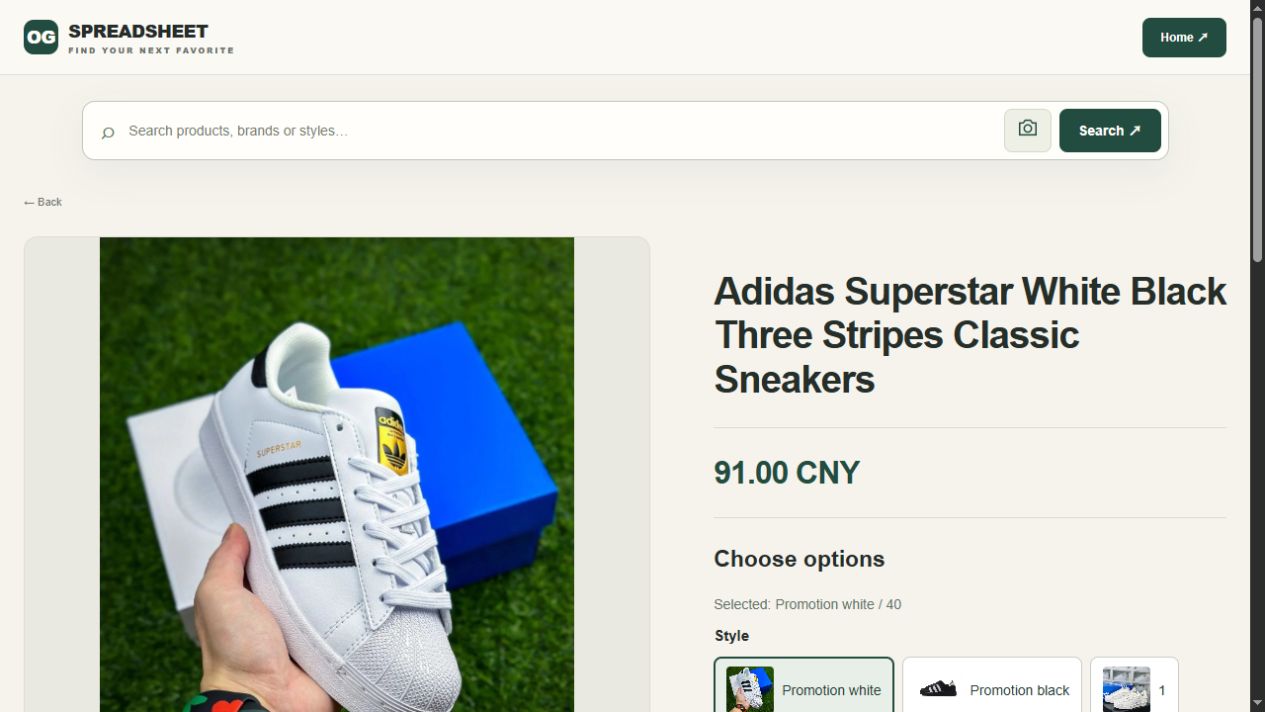
Keep size systems visible
Record whether the listing uses a particular regional size system and which model the chart describes. Do not copy a conversion from an unrelated pair merely because the number seems familiar.
If a chart provides a length, establish what that length measures. Foot length and a product dimension are not automatically the same field. Width and fit preference may still require clarification even when the length is clear. The size guide helps compare like measurements rather than applying a universal size-up rule.
If you cannot establish the relevant size information, consider another candidate instead of choosing blindly from the available numbers.
Compare two candidates without inventing a winner
Imagine that two hypothetical pairs appeal to you: one matches the outfit you planned but has unclear size information; the other has clearer option details but a different shape. The decision is not settled by whichever picture looks more polished.
| Question | Why it affects the shortlist |
|---|---|
| Does the pair suit the intended occasion? | Prevents a style match from substituting for a use requirement |
| Is the exact model and variant identifiable? | Avoids comparing different versions as one product |
| Is the size information understandable? | Makes the selection more than a guess |
| What remains unknown before purchase? | Shows which question needs an answer before committing |
| Does the full parcel proposal fit the budget? | Keeps delivery separate from the item price |
You may decide neither pair has enough information yet. A shortlist is allowed to remain a comparison rather than immediately becoming an order.
Review the matched pair at the warehouse
When photographs are available for a purchase, first confirm that they belong to the intended item and option. Inspect visible labels and the views relevant to any concern. If one shoe or an important area is obscured, request the specific clarification you need rather than asking for a general approval.
Pictures can document visible differences or damage, but they cannot reproduce walking comfort or establish every hidden property. The QC guide explains how to separate those conclusions.
If a visible problem changes your decision, check the applicable return process before approving international shipment. Do not assume that a product photo or a community verdict guarantees the result of a remedy request.
Decide what to do with packaging before pricing the parcel
A shoe box can matter to your preferences and the parcel proposal. If you are considering removing or changing packaging, ask what would be removed and what protection remains. Do not assume that a smaller package is automatically appropriate or that a particular saving is guaranteed.
Compare the actual alternatives where available. The shipping calculator guide explains why both packed weight and dimensions can affect the calculation. The shipping guide keeps route conditions and included services beside the quote.
Build the outfit without losing the shoe decision
Once a candidate meets the needs you can assess, compare it with the garments you intend to wear rather than adding unrelated items solely to enlarge a haul. The pants guide can help with trouser shape, and the ordering guide explains how to retain each selected option separately.
For broader collection comparison, read Best USFans Spreadsheet. A larger catalogue may give more candidates, but each pair still needs its own selection checks.
Frequently asked questions
Can a shoe's appearance prove sports performance?
No. Appearance does not establish traction, durability or suitability for a specific activity. Investigate the actual model and relevant specifications.
Should I use the size I always buy?
Use it as context, not a universal conversion. Confirm the model's size system and the information available for the particular option.
Do QC photos prove comfort?
No. They can show visible details of the matched pair, not reproduce wearing it.
Is removing the box always cheaper?
Compare the actual packing proposals and consider protection. Do not treat an assumed weight reduction as a verified final saving.