
USFans Spreadsheet · Guides
USFans Jeans, Pants and Shorts: Compare the Waist, Rise and Hem Together
Compare USFans jeans and shorts using waist, rise, inseam and leg-opening measurements, then match the selected option with relevant garment photos.
The waist size is only one part of choosing trousers. Two pairs that close comfortably can sit at different heights, leave different room through the thigh and finish differently over the same shoes. When comparing USFans jeans, start with a pair you already use and identify what you want to keep or change.
The USFans spreadsheet collection is a starting point for finding candidates. Keep the product reference, selected size and colour attached to each candidate so that a saved image does not become separated from the item you intended to buy.
On this page
Decide where the waistband should sit
Try your reference trousers in the way you normally wear them, with the shoes you expect to use. Note whether you like the waistband position and whether the hem length works when standing and sitting. If you want a different fit, describe the change rather than simply writing “larger.”
For example, wanting more room through the thigh is not the same as wanting a wider waistband. Choosing a larger label without checking the other dimensions may change both. A belt can hold a waistband in place, but it does not make every other proportion equivalent to the fit you wanted.
Use the size guide for measurement conventions before comparing charts. Body measurements, flat garment dimensions and circumference must not be treated as interchangeable numbers.
Read a USFans spreadsheet jeans entry as a specific item
A useful saved entry identifies the actual cut and option rather than only a brand or style name. Check whether the chart and photographs apply to the same variant. Different washes or versions grouped under a listing need not have identical information.
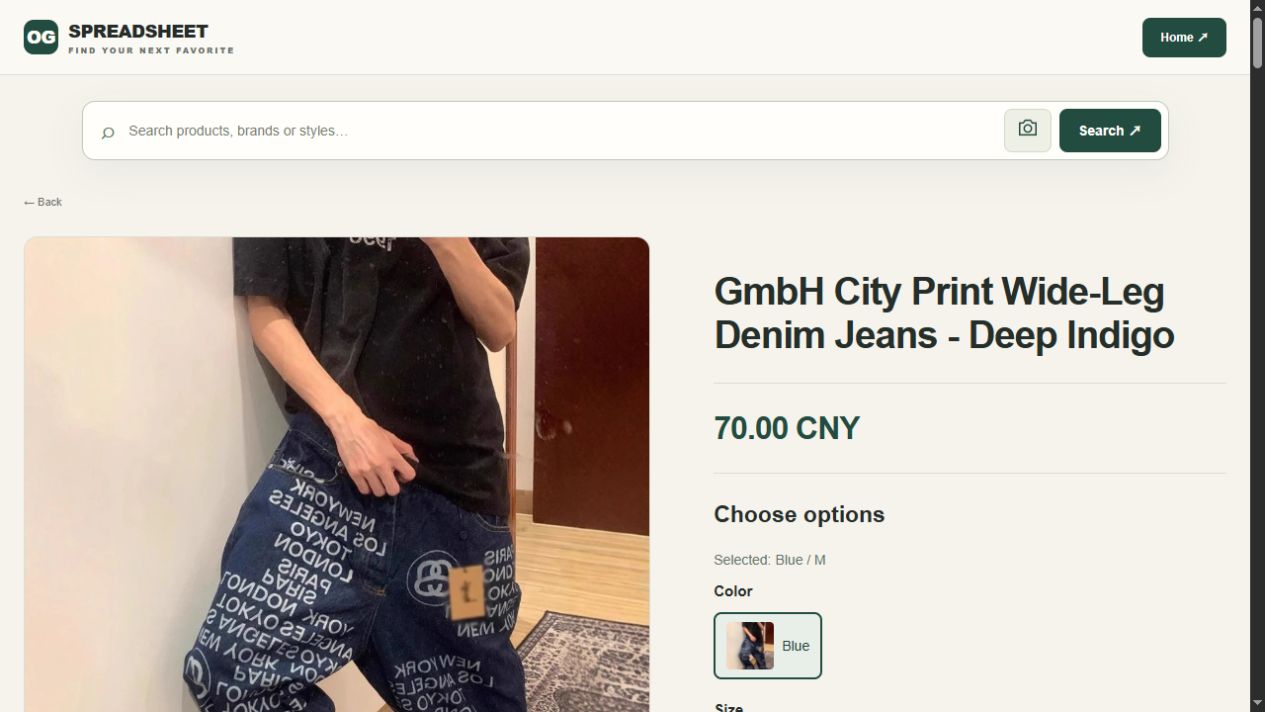
Inspect the GmbH city-print wide-leg deep-indigo jeans candidate on OG for a concrete design to compare. The city print and wide-leg description identify its visual direction; they do not establish how the selected size will fit you or how the fabric behaves after wear and washing.
With a printed design, consider where the artwork sits on the legs and how much remains visible beneath the top you plan to wear. Do not infer print durability from a sharp product image. Review the exact description and available care information for the selected item.
Compare a set of dimensions, not an isolated number
Swipe sideways to compare all columns.
| Dimension | What it helps you compare | Common source of confusion |
|---|---|---|
| Waist | The opening at the intended wearing position | Relaxed elastic versus stretched measurement |
| Rise | The relationship between waistband and crotch | Different starting points or front versus back rise |
| Thigh | Room near the upper leg | Measurement taken at a different distance below the crotch |
| Inseam | Length along the inside leg | Confusing it with total outside length |
| Leg opening | The finish around the shoe | Flat opening width versus circumference |
Lay the reference pair flat without deliberately stretching it. Record the endpoints you use. If the listing uses another method, resolve that difference before drawing a conclusion from a small numerical gap.
A chart still does not describe every part of wearing the garment. Construction and fabric can affect how it moves. Treat the measurements as a more useful comparison than a label alone, not a guarantee of comfort.
Choose the hem with the shoes in mind
A wide leg and a narrow opening can create very different outlines over the same footwear. Compare the reference trousers with your intended shoes instead of judging the trousers in isolation. Decide whether you prefer the hem above the shoe, touching it or forming more folds.
The shoe guide can help organise that pairing. If you plan an alteration, establish whether it is practical for the particular garment before relying on it; do not assume that changing the length leaves a printed or detailed design unchanged.
Shorts need their own comparison
For shorts, consider the hem position and leg opening together. Measure a pair you like rather than transferring a jeans size label without checking. An elastic waistband also needs context: a relaxed measurement does not tell you the entire usable range or how comfortably it will sit.
If you are looking for Jordan shorts or another named design, check the exact selected product and its included pieces. A photograph of a coordinated outfit does not establish that the top is included. Use the sets guide when the purchase is intended to cover more than one garment.
Make the warehouse-photo question precise
Once actual-item photos are available, match the colour and option to the order. Inspect visible print placement, pocket arrangement, fastening details and any readily visible damage. For a fit concern, identify the measurement you need rather than relying on a folded overview.
For example, a waist measurement should show the waistband and the measuring scale clearly enough to understand the method. An inseam question needs a different view. The QC photo guide explains why multiple general photographs may still fail to answer one specific question.
Visible checks cannot prove stretch recovery, long-term seam strength, colourfastness or comfort. Avoid turning a clean photograph into an untested quality verdict.
Keep the decision attached to the order
Before buying, retain the size chart you actually used and the selected option reference. This helps you distinguish a later listing change from a different selection. If an important point remains unclear, seek clarification before proceeding rather than expecting a shipping-stage photo to solve an ordering decision retroactively.
The USFans spreadsheet guide connects item selection with the later order stages. When comparing delivery costs, use actual packed information through the shipping calculator guide; the appearance of denim alone cannot supply a parcel weight.
Common questions
Should I choose jeans using only my usual waist label?
No. Use the actual chart, measurement convention and other relevant dimensions. Your usual label is a starting reference, not a universal sizing system.
Can the same size work for trousers and matching shorts?
It may, but check each garment separately. Their cut, waistband and measurement information can differ even when they are styled together.
Does a product photo show the exact indigo shade I will receive?
Not reliably across lighting and screens. Confirm the selected colour description and compare relevant images, without treating photographs as a calibrated colour sample.