
USFans Spreadsheet · Guides
USFans Size Guide: Compare the Measurement, Not Just the Size Letter
Compare USFans clothing measurements using matching units and endpoints, evaluate size trade-offs and distinguish a tag photo from a physical measurement.
A size selection is easier to judge when you can say what the number measures. “Medium,” a flat chest width and a body circumference are not interchangeable descriptions. Before ordering a find from a USFans spreadsheet, identify the exact item and compare measurements taken in the same way.
Do not apply a blanket rule to size up or down across every seller. Build the decision around the particular product, its chart and how you want to wear it. The USFans ordering guide explains where to retain that option so it stays associated with the purchase.
On this page
Choose a useful reference garment
For clothing, an item you already wear comfortably can be a useful starting reference. Pick one with a similar purpose: comparing a fitted T-shirt with an outer layer intended to cover a sweater may answer the wrong question.
Lay the reference garment flat without deliberately stretching it. Record the measurement endpoints as well as the number. If a seller's diagram uses a different method, do not compare the two results as though they were identical.
For a top, you might need chest width and length. For trousers, waist measurement alone may leave rise and leg length unanswered. The important measurements depend on the shape and use of the item, not on a fixed list that applies to every purchase.
Resolve units and measurement type first
Before comparing a chart with your notes, check three things:
- Are both values in the same unit?
- Are both values describing the garment, or is one a body measurement?
- Were both measured between the same points and under similar conditions?
One inch equals 2.54 centimetres. Converting units is straightforward, but it does not fix a mismatch between a garment width and a body circumference. Doubling a flat width may help describe the garment geometrically; it does not automatically give the body size that will fit comfortably inside it.
If a chart heading is unclear, ask what it means before choosing. Do not infer the method from a number merely because it resembles a size you have bought before.
A comparison with two competing priorities
Imagine that a favourite top measures 54 cm across the chest and 68 cm in length. A candidate chart lists the following hypothetical options using the same methods:
Swipe sideways to compare all columns.
| Option | Chest width | Length | Difference from the reference |
|---|---|---|---|
| A | 53 cm | 68 cm | 1 cm narrower; same length |
| B | 56 cm | 71 cm | 2 cm wider; 3 cm longer |
Option B is not automatically the better choice because it is wider. If your main concern is excessive length, it introduces a different problem. Option A is not automatically suitable either: the narrower cut may be the detail you most want to avoid.
The example illustrates how to compare trade-offs, not a recommendation for a real listing. If neither option meets your needs, choose another item instead of forcing a size letter to solve a shape mismatch.
Apply the same care to a real product candidate
Inspect the hoodie on OG as a product to investigate. Check its current options and any available measurements before applying your reference notes. The listing name does not establish its dimensions, stretch, material or fit.
If you intend to wear a pullover over another layer, use a reference that works in that arrangement. A flat measurement is still only one input: fabric behaviour and construction can affect how a garment feels when worn, and a product photograph cannot settle all of those questions.
Return to the USFans spreadsheet collection if a different category is more suitable. The best-spreadsheet guide explains how to compare collections by the information they make available, rather than by product count alone.
Treat shoes, sets and adjustable items separately
For shoes, confirm which sizing system is shown for the exact model and whether the chart describes foot length or another dimension. Do not assume a conversion from a different pair transfers perfectly. Width and intended use can remain unresolved even when a length figure is available.
For a set, check the top and bottom independently. One option may work for the top and not for the trousers. Confirm whether the offered selection applies to the whole set rather than assuming that mixed sizes are available.
For adjustable clothing or headwear, ask what range the stated measurement describes. A single number may not explain the relaxed and extended states. Avoid stretching a reference item to its maximum and treating that as a comfortable everyday fit.
Use warehouse photos for the question they can answer
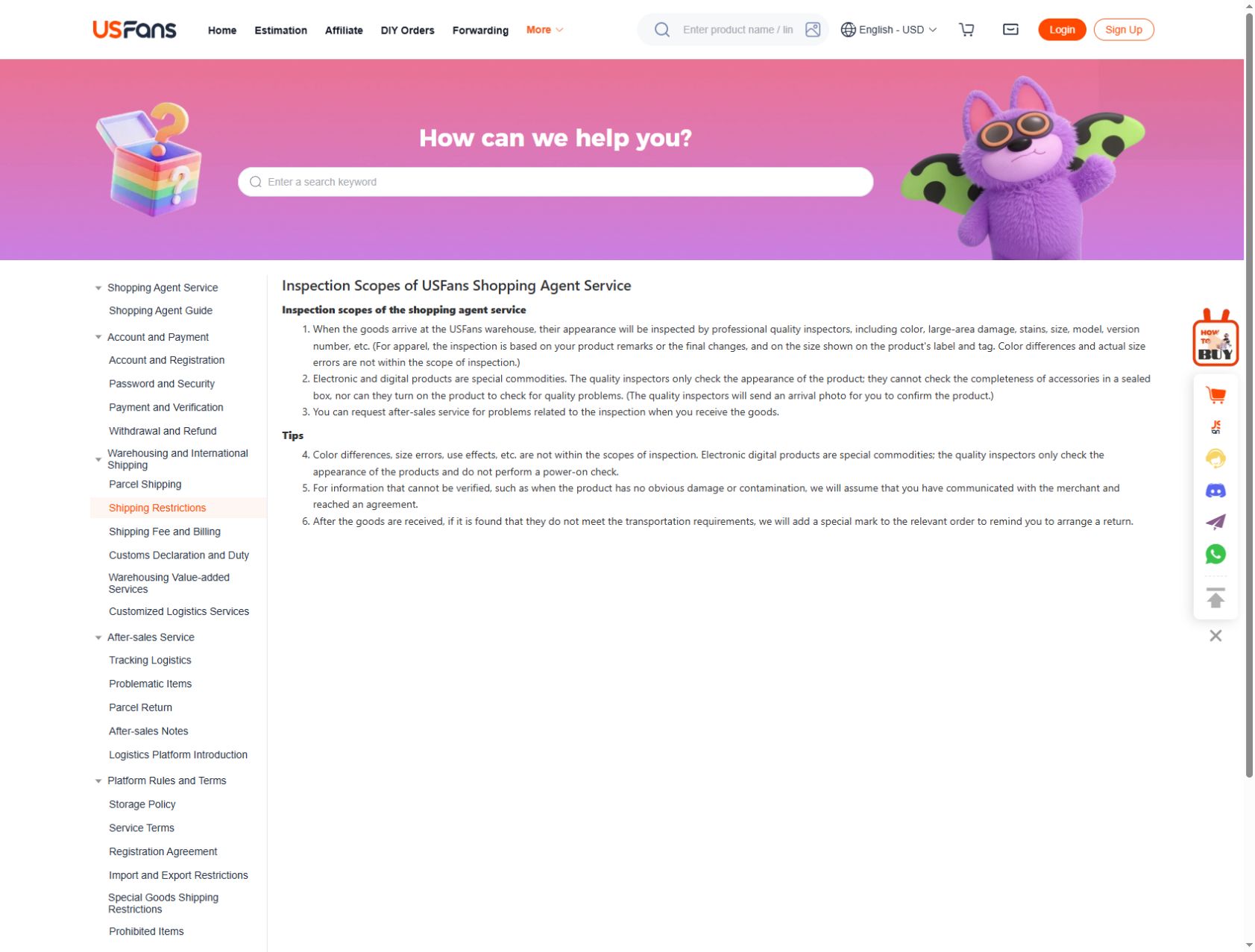
USFans' inspection description distinguishes labelled size from actual garment measurements. A readable label can establish what the tag says; it does not establish every physical dimension.
If a measurement matters before shipment, request a clearly specified view if that service is available. Name the endpoints, ask for the tape to be visible and avoid mixing several ambiguous requests in one message. Confirm any charge before requesting additional work. The QC photo guide helps turn a fit concern into a specific image request.
If the result differs from the information you relied on, keep the listing and measurement context together. Check the applicable return process before making further commitments; a measurement concern does not itself establish that a return will be approved.
Frequently asked questions
Can I choose solely from height and weight?
Those details do not describe every body proportion or your preferred garment shape. Product measurements and a suitable reference garment usually answer more specific questions than a broad size suggestion alone.
Is there one USFans size chart for every find?
Use the information for the particular item and seller rather than treating an agent or collection name as a universal clothing size system.
Should I round every measurement up?
Not automatically. Consider which dimension is being rounded and whether extra width or length matches your intended use. If the chart is ambiguous, clarify the method instead of concealing uncertainty with a larger size.
What should I save with the product link?
Keep the selected size, the relevant chart context and your comparison notes. A link alone may not preserve your chosen option. See spreadsheet links for keeping that distinction clear.