
USFans Spreadsheet · Guides
USFans Headwear: Compare the Crown, Brim and Adjustment Before Choosing
Compare USFans headwear candidates by crown, brim, size information and adjustment, then use relevant item photos without assuming comfort or protective performance.
A cap can look simple in a product photograph and still sit very differently from the one you already wear. The height of the crown, shape of the brim and adjustment arrangement all matter. Start a USFans headwear search by identifying what you like about an existing hat, not just its colour or logo.
Use the USFans spreadsheet collection to save candidates with their exact product references. Keep the selected colour and size beside the link so you can return to the same option rather than a visually similar listing.
On this page
Choose the shape you want to wear
Put on a hat you own and look at it from the front and side. Does it sit at the height you prefer? Does the brim work with your glasses? If you usually wear a jacket with a hood, try the combination rather than judging each piece separately.
Write down the change you want: a different brim shape, less height above the head, or another adjustment arrangement. Those observations make a shortlist useful. They do not require claiming that one hat shape is universally better for a particular face.
For outfit proportions, compare the collar and hood in the jacket guide. A hat chosen for appearance need not have the same requirements as one chosen for a specific outdoor activity.
Inspect a specific cap candidate
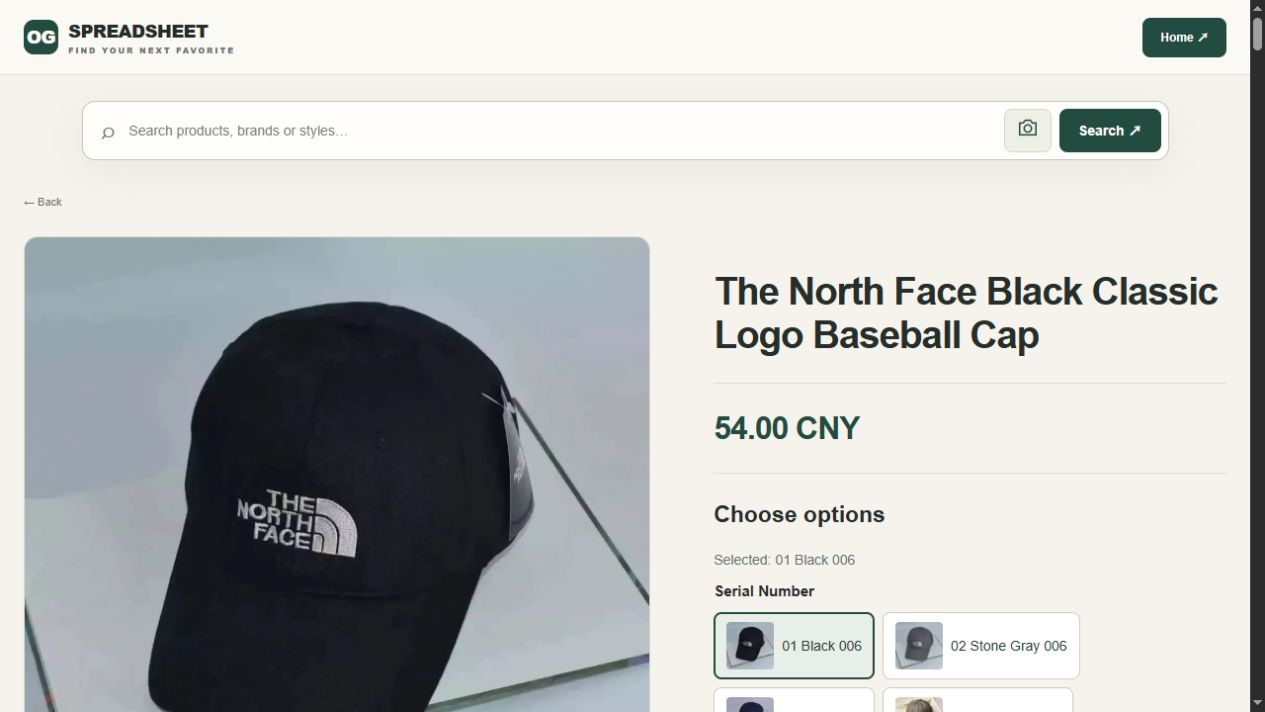
View the black TNF logo-cap candidate on OG for a concrete option to inspect. Confirm the current description, selected variant and available sizing information before choosing it.
The black colour and logo identify the visual candidate. They do not establish the adjustment range, material composition, comfort or protective performance. Examine the rear and side views as well as the front; a front-facing product image may leave the closure and overall crown shape unclear.
If more than one version appears in a listing, check which photographs belong to the selected option. Do not assume every version shares the same closure simply because the front looks similar.
Circumference is a starting point, not the whole fit
Follow the measurement method supplied for the specific product. Where a head-circumference measurement is requested, use a flexible tape along the intended wearing position without deliberately pulling it tight. Keep the units clear and compare the result with the applicable size information.
For an adjustable cap, look for its stated range rather than treating “adjustable” as a promise that it will suit everyone. Circumference also does not fully describe how the crown sits. If depth or shape is important to you, seek relevant dimensions or views rather than attempting to derive them from an angled photograph.
The size guide explains how to keep measurement methods consistent. Avoid substituting an unrelated brand's chart for missing information about the actual candidate.
Compare different kinds of headwear separately
| Type of candidate | Detail worth resolving |
|---|---|
| Adjustable cap | Closure arrangement and stated size range |
| Fitted cap | Exact size system and applicable measurement method |
| Bucket-style hat | Crown shape, brim dimensions and selected size |
| Knitted hat | Stated sizing and whether the fold shown is part of the intended styling |
A photo of a knitted hat cannot tell you how comfortably it stretches. Similarly, a broad brim alone does not establish a tested level of sun protection. If protective performance is essential, require applicable product information instead of inferring it from shape or colour.
Look for the views that answer your question
When actual-item photographs are available, match them to the selected option before examining the details. A clear overview can help confirm the visible colour selection and design. A rear view can show the adjustment arrangement. A side view is more useful for crown and brim shape than another tight crop of the logo.
If the hat appears distorted, distinguish what the image actually shows from what might be caused by positioning or packing. Seek a clearer view before declaring either damage or a perfect condition. The QC photo guide explains why appearance evidence is not a wear test.
Keep personal order details out of any images you share. There is no need to expose a shipping label to ask a question about a brim or closure.
Decide how much packing protection matters
Before arranging shipping, consider whether preserving the hat's shape is important to you. Ask what packaging is available and how the resulting packed dimensions affect the quote; do not assume a particular protective insert or packing service is included.
The shipping calculator guide helps compare quotes on consistent weight and dimension assumptions. A small product does not necessarily mean a negligible addition to a packed parcel, and no universal saving follows from removing packaging.
Final questions before ordering
Is an adjustable cap automatically safer to size than a fitted one?
It offers an adjustment mechanism, but you still need the relevant range and enough information about the shape. The word alone does not resolve fit.
Can I tell whether the hat will work with my glasses?
Use your existing hat and glasses to understand your preferences, then compare the candidate's shape. Photographs cannot guarantee that a different cap will sit comfortably with your frames.
Does the cap example prove authenticity or current stock?
No. It is a specific listing to inspect, not a completed purchase or authentication result. The spreadsheet review explains how to distinguish useful product information from conclusions that need separate evidence.